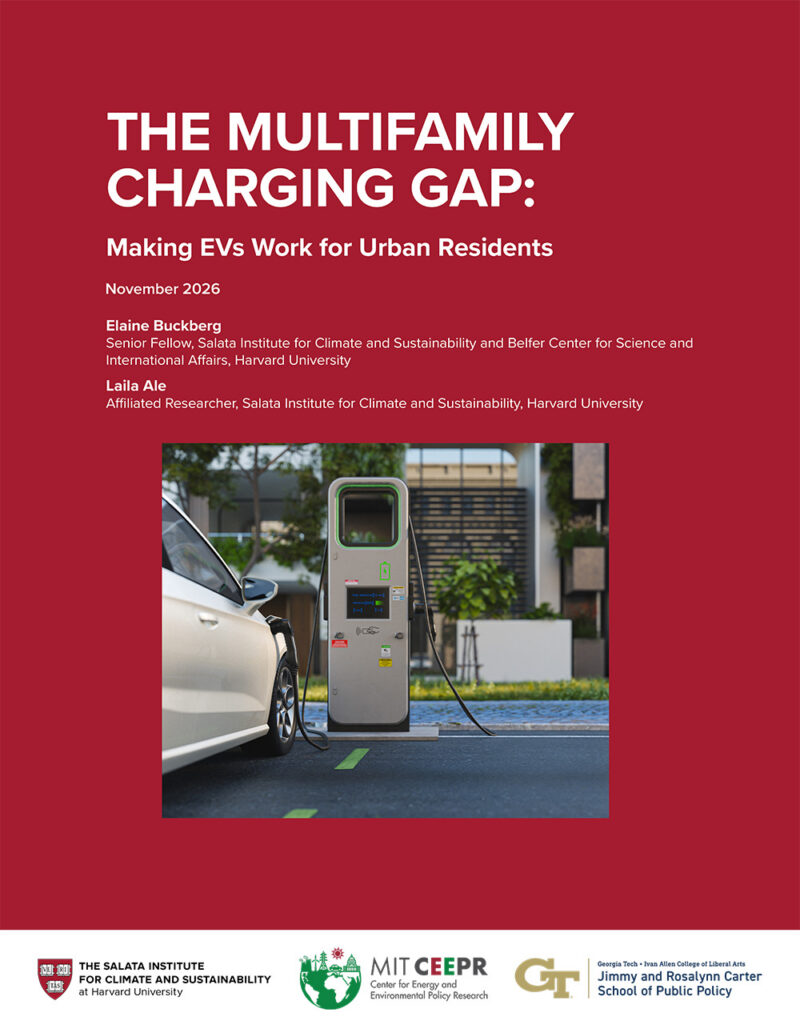


The Multifamily Charging Gap: Making EVs Work for Urban Residents
Elaine Buckberg and Laila Ale
November 2026
This report addresses a single question: how to bring electric vehicle (EV) charging to the tens of millions of Americans who live in multifamily housing—from renters to condo, townhome and co-op owners. For these residents, one of the biggest barriers to going electric is not buying the vehicle, but the absence of a convenient and affordable place to plug in. And that barrier is highest in the densest cities, where apartment living is most common and where charging is typically hardest to build.
Home charging is rare today at multifamily buildings, and often difficult for a resident to arrange—that’s the charging gap. Single-family homeowners with dedicated parking can typically call an electrician and promptly install a charger in their garage or driveway, although doing so may involve some electrical upgrade, and then home charge at residential electricity rates. For multifamily residents, buying an EV involves figuring out where to charge and how much it will cost. If chargers are not already in place at the building, arranging one is often complicated because multifamily housing residents do not control their parking lot or garage, nor their building’s electrical infrastructure, and relying on public chargers typically involves paying a premium over residential electricity rates.